

What is the Difference Between Indica and Sativa? Terpenes
Why does the Distinction Between Indica and Sativa Even Matter?
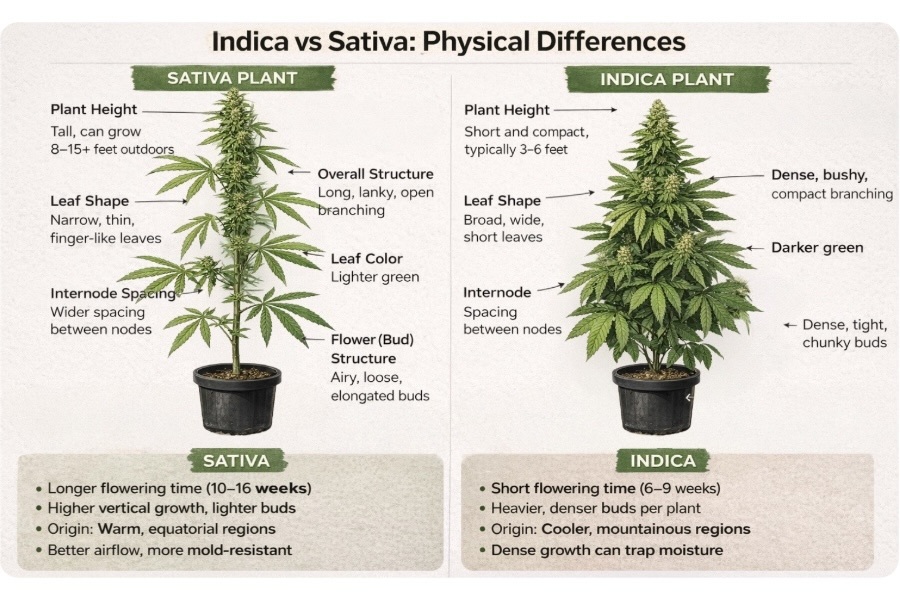
Indica plants have a different appearance from sativa plants, sativa strains are taller with slimmer looking leaves while indica strains are shorter, shaggier looking plants. The differences between the two don't stop there, they are also said to provide different effects. Sativas are uplifting and energetic while indicas are relaxing, producing sedative “sleepy time” effects!
The label of either indica or sativa does not fully determine the effect you will experience. There's also terpenes, cannabinoids, your consumption frequency and even temperature which can all change up the overall feel of your high. Think of indica and sativa as the start of your mold, while the other elements shape it to your liking.
Indica vs Sativa - Plant Characteristics
Where Did the Terms Indica and Sativa come from?
These two terms were never meant to describe a certain effect, they were originally created to identify each plant's anatomical differences. As previously mentioned, sativas are taller and thin while indicas are short and bushy. The two classifications of cannabis plants originally indicated where they were grown, in different climates creating different characteristics. Sativas were native to warmer climates and higher humidity areas and Indicas developed in colder, rugged, rocky kinds of areas.
It wasn't until much later when cannabis use became commercialized that these two terms were used to refer to the type of effect the consumer might experience. These days, it's rare to find a 100% sativa or 100% indica plant, most of what you see on the market today is a hybrid dominant strain. Carrying the characteristics of both plant types but predominantly either sativa or indica. This is because cannabis plants have been bred together over time, making it close to impossible to find full sativa or indica classification or even exact strains.
As this industry has progressed and legalization along with thousands of dispensaries are becoming more common throughout the United States, the terms sativa and indica are NOW considered to be a basis for your product's effect and NOT a reference to its genetics anymore.
- Interesting Note: Breeders decided to crossbreed cannabis plants to produce plants with specific valuable characteristics, cross breeding gave them more control over the plants potency, terpene content, and cultivating. Which in turn made their plant quality generally more consistent with more predictable end results.
Traditional Understanding of Sativa and Indica:
The traditional understanding between sativa and indica, is that sativa provides a more energetic effect while indica produces a relaxing effect. Sativas are associated with day time use, so that you are still able to go about your day without feeling too tired and drowsy. Indicas are associated with a term called “couch-lock” which is exactly what it sounds like, unable to get off of the couch. Hahah!
The preference between the two is totally up to the user and their needs, some people opt for a complete non dominant hybrid, offering a 50/50 split and a balance of both. For example, experiencing an intense body high without feeling heavily sedated.
Why Indica and Sativa Don't Paint the Full Picture - Terpenes
As mentioned, the indica and sativa labels only provide a general idea of your product's effect, but terpenes are the driving force behind your experience. Terpenes change everything.
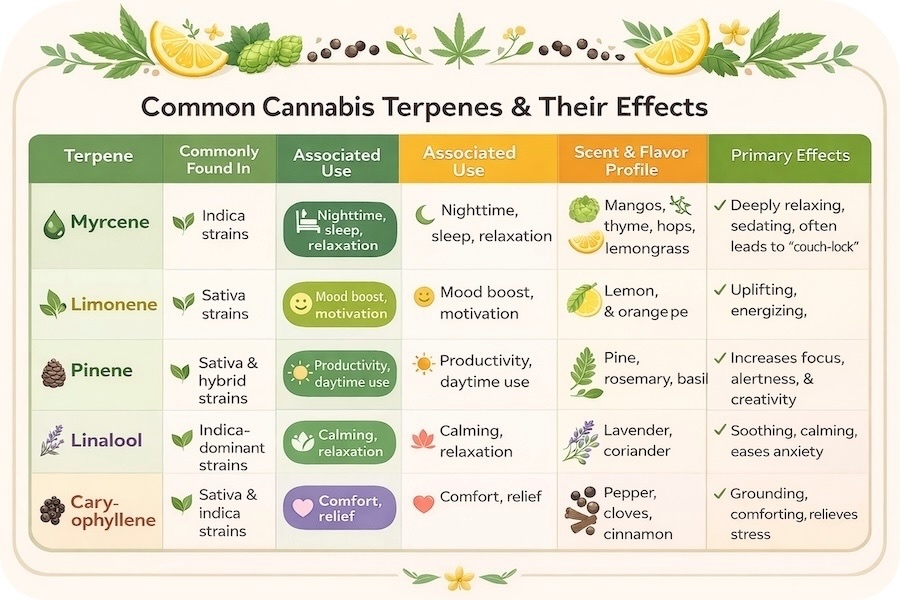
Myrcene
Commonly Found in Indicas - Associated with strains used for night time, sleep, or relaxation.
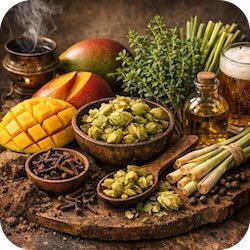
- Scent and Flavor: Earthy, musky, herbal, a little fruity or a little like cloves. Also found in mangoes, hops, thyme, and lemongrass.
- Effect: Known for its strong, soothing effects on the body.
Limonene
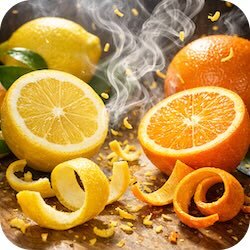
Commonly Found in Sativas - Associated with strains used for positive mood and motivation.
- Scent and Flavor: Citrus, like lemon and orange peel, a bright and sharp aroma often found in citrus rinds
- Effect: It makes you feel better and lifts your mood.
Pinene
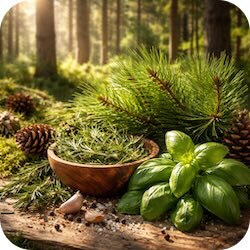
Commonly found in Sativa and Hybrid Strains - Associated with strains used for productivity and daytime usage.
- Scent and Flavor: Pine and woody like a fresh forest. Found in pine needles, rosemary, and basil
- Effect: Makes you more alert, focused, and clear headed
LinaloolWhat a
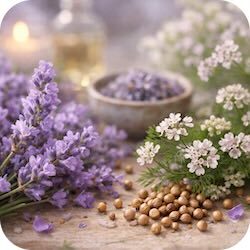
Commonly found in Indica Dominant Strains - Associated with strains used for calming and relaxation.
- Scent and Flavor: Floral, kind of like lavender. Very soft and slightly sweet. Usually found in lavender and coriander.
- Effect: Has calming and soothing effects, and it also has some sedative effects. Stress relief.
Caryophyllene
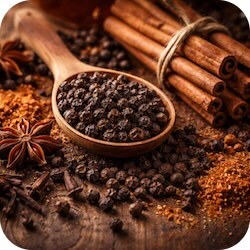
Commonly found in both Sativa and Indica - Associated with strains that are used for comfort and relief.
- Scent and Flavor: Spicy, peppery, warm, and woody. Found in black pepper, cloves, and also in cinnamon.
- Effect: Known for its grounding and calming qualities, as well as its body relief for strains and pain.
Indica vs Sativa in Concentrates for Dabbing
Concentrates usually have a higher terpene content than flower does, averaging out to roughly 3-12% opposed to flower which is around 1-4%. The mixture of both high thc levels and high terpene content, and other compounds creates something called the entourage effect.
First I think it's important we all know what the word entourage means, it originates from a French word that means “to surround’. The purpose of an entourage is to support and enhance the main individual. Think of THC as the pop star, and terpenes/other cannabinoids as the back up dancers and singers. They all work together and feed off of each other to create a once in a lifetime performance.
It's important to note that not all concentrates are the same, for example pure distillate is completely stripped of terpenes and other compounds, while diamonds and sauce have an incredibly high terpene content. The entourage effect is not inclusive to all concentrates!
A quick lesson on terpenes and temperature:
- Terpenes are activated with heat just like THC is, however, they also rapidly degrade with high temperatures leaving you without their added effects. To get the most out of your terpenes aim for lower temperature dabs, or a gradual rise in temperature like you would find with cold start dabs.
Choosing the Right Strain for You
Choosing the right strain for you might sound totally easy or totally daunting depending on which way you look at it. Be on the lookout for terpene content, dispensaries these days make it incredibly easy to find what you are looking for with an easy to read label.
The most common terpenes found within the sections above have a specific scent and taste, don't go off eating your friends' weed. But, when in doubt you can always give it a sniff test.
Recent Posts
-

12 Best Cannabis Strains for Pain
Why Do People Search For Cannabis Strains for Pain Relief Cannabis has been used as a holistic appro …24th Feb 2026 -

Every Dabber Needs a Hot Knife
You're all geared up, you have your dab loaded on your dab tool, your banger is piping hot ready for …19th Feb 2026 -
Terpenes Explained: A Complete Guide for Dabbing & Flavor
Terpenes are an important part of the equation when it comes to the type of high you'll experience. …13th Feb 2026